
Oxford, NC - From Henderson-Oxford Airport, two of general aviation's top four-seat piston singles go head-to-head: the time-honored Cessna 172 Skyhawk and the sleek, modern Tecnam P2010. Our expert aviation counselor, John Parker, takes a closer look at how each aircraft compares in design, efficiency, and mission capabilities.
In this video, he explores their history, construction, performance, and capabilities, breaking down how each aircraft performs in both training and recreational settings.
So what makes the Tecnam P2010 stand out? Parker calls it the "best kept secret in general aviation," thanks to its efficiency, speed capabilities, and overall comfort. Let’s delve into some of the highlights that make the P2010 a standout aircraft for today’s missions.
History
To provide a background, the Cessna 172 Skyhawk is the most produced aircraft, setting the standard for flight training since the 1950s. Most pilots have flown a 172 at some point in their career, making it a legend among general aviation. However, the Tecnam P2010 is here to bring general aviation into the modern era.
Airframe & Construction
The Tecnam P2010 combines the trusted single-engine layout with modern materials and design for a stronger, more aerodynamic aircraft that is more efficient in flight.
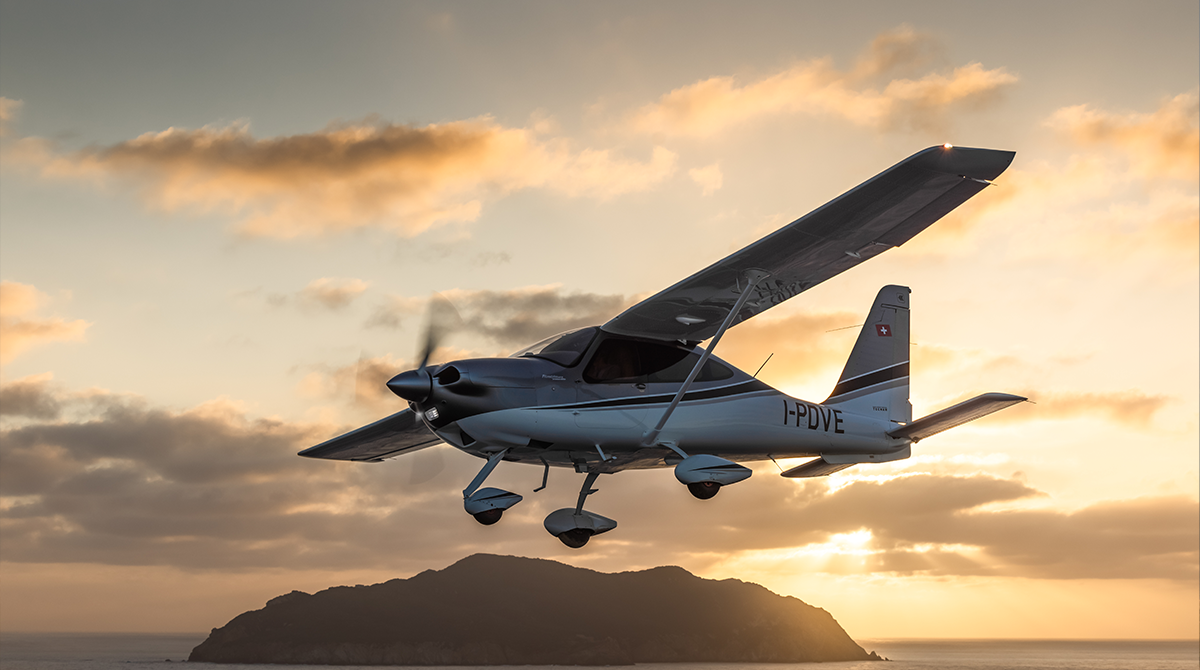
From the Cessna’s classic aluminum airframe, Tecnam advanced to a carbon-fiber composite fuselage. This design provides:
- Greater strength-to-weight ratio
- Exceptional corrosion resistance and flexibility
- A cleaner, more aerodynamic profile
- Lower maintenance requirements
Paired with durable aluminum wings that are easy to repair or replace, the combination creates a stronger, sleeker, and more efficient aircraft while maintaining the benefits of a high-wing layout.
Tecnam also took into consideration the location of the wings. In the P2010, the wing struts are behind the pilot door, increasing overall visibility and making it easier to see the runway.
Powerplants
The modern Cessna 172 Skyhawk and Tecnam P2010 both have the same powerplants to start: the 180 HP Lycoming IO-360 with fixed pitch propellers. But the P2010 stands out due to its cleaner aerodynamics, light composite fuselage, and wing design. This allows it to reach cruise speeds of 135 kts for TAS, a climb rate of 800 ft/min, all with a useful load of 880 lbs.
It gets even better.
The Tecnam P2010 has three options for engines.
- 180 HP Lycoming IO-360
- 215 HP Lycoming IO-390
- 170 HP Continental CD-170 Jet-A burning diesel engine
Three options. Can it get better than that?
Specifications
Cessna 172 Skyhawk
- Max cruise speed: 120 kts for TAS
- Climb rate: 700 ft/min
- Useful load: 878 lbs
- Fuel burn: 8 gal/hr
- Range: 640 nm
Tecnam P2010
- Max cruise speed: 135 kts for TAS
- Climb rate: 800 ft/min
- Useful load: 880 lbs
- Fuel burn: Varies by engine
- Range: 720 nm
Cockpit Design
Both have Garmin avionics, yoke-style controls, and seating for four. But, the biggest difference is in the interior design.
The Tecnam P2010 reflects the high-class standards Italian design is known for. Inside you will find:
- A lot more space and utility
- Comfortable, roomy interior
- Garmin G1000 NXi avionics suite
- Modern lever-style controls
- Pushrod control, giving better feedback during flight
- Electronic rudder trim
All of these make the P2010 a clear upgrade to traditional trainers like the 172.
Cost & Operating Costs
The Tecnam P2010 is available now, no waiting list required. At around $680,000 this kind of aircraft is hard to find.
For those looking for a used aircraft, they can find used P2010s in the $450,000 range depending on year and condition. But, don't wait long. Once people start to notice the benefits of this aircraft, the value is bound to go up.
The Winner
At the end of the video, Parker declared the Tecnam P2010 as the best four seat piston single.
"Tecnam took what worked and made it better".
The Tecnam P2010 is a bigger, faster aircraft made from stronger materials and much more comfortable than previous trainers.
If the Tecnam P2010 sounds like the aircraft for your next mission, contact one of our expert aviation counselors at LifeStyle Aviation to learn more.
Frequently asked questions
Here are some of the most asked questions about the Cessna 172 vs. the Tecnam P2010.
Our company specializes in consulting, product development, and customer support. We tailor our services to fit the unique needs of businesses across various sectors, helping them grow and succeed in a competitive market.
The P2010 cruises faster at 135 kts for TAS due to its aerodynamic design.
The P2010 is slightly more fuel-efficient, though the 172 remains economical and widely used.
The P2010 has a wider cabin, while the 172 is more compact but functional.
The 172 has widely available parts and a long maintenance history. The P2010's composite fuselage reduces corrosion but may require less familiar repair methods in some areas.
The 172 is highly forgiving and ideal for beginners. The P2010 is responsive and suitable for learning.
The P2010 uses a composite fuselage, aluminum wings, and optional glass cockpit, giving it update design and technology features compared to the older 172.